

Disclaimer:
The information provided on MyAmericanSavings.us is for educational purposes only and should not be construed as financial, investment, or legal advice. Please consult with a licensed professional before making any financial decisions.
Key Points
- Shopping addiction often starts with emotional spending, where people buy things to cope with stress, boredom, or sadness.
- Warning signs include impulse purchases, rising debt, and hiding spending habits, which can lead to serious financial problems.
- Breaking the cycle requires awareness, spending limits, and healthier coping habits to regain control of your finances.
Shopping is supposed to be a normal part of life. Buying groceries, replacing worn-out clothes, or treating yourself occasionally can even feel rewarding. But when shopping turns into a habit you can’t control, it may signal something deeper — a behavioral addiction.
Research suggests that about 5.8% of adults in the United States experience compulsive buying behavior during their lifetime. Some studies also show 8–12% of college students display signs of compulsive shopping, highlighting how common the problem can be among younger consumers. According to research compiled by Addiction Group, compulsive buying behavior affects millions of Americans and is increasingly linked to the rise of online shopping.
Compulsive buying—sometimes called shopping addiction or compulsive buying disorder (CBD)—is characterized by repeated urges to shop even when it causes financial stress, emotional distress, or relationship problems. A clinical review published by Cambridge University Press explains that compulsive buying disorder is considered a behavioral addiction similar to gambling or internet addiction.
Another alarming statistic: over 40% of people with shopping addiction struggle to meet credit card payments, and many carry significant debt linked to their buying habits. Data highlighted by Addiction Group’s shopping addiction research shows that compulsive spending often leads to rising credit card balances, financial stress, and long-term debt.
Shopping Addiction at a Glance
| Statistic | Insight |
|---|---|
| 5.8% of adults | Estimated prevalence of compulsive buying |
| 8–12% of college students | Show signs of compulsive shopping |
| 58% of compulsive buyers | Carry large debts from shopping |
| 70% of addicts | Experience a “high” after buying something |
| 73% of marriages | Experience financial arguments due to compulsive spending |
With online shopping, one-click purchases, and constant marketing, it’s easier than ever to fall into the spending trap.
So how do you know if your shopping habits have crossed the line?
Below are 9 warning signs you may have a shopping addiction — and practical ways to regain control.
 Related: Is Buy Now, Pay Later Safe? 10 Risks You Should Know
Why Most Families Waste Money on Subscriptions (And How to Stop)
1. You Shop to Improve Your Mood
One of the most common warning signs of shopping addiction is emotional spending.
You may shop when you feel:
-
Stressed
-
Lonely
-
Bored
-
Anxious
-
Sad
Buying something new triggers a dopamine release in the brain, creating a temporary emotional “high.” Unfortunately, that feeling fades quickly, leaving you wanting to shop again.
Studies show that over 85% of compulsive buyers report experiencing a strong emotional rush while shopping.
What to Do
Replace shopping with healthier emotional outlets:
-
Exercise or walk outside
-
Call a friend
-
Journal your feelings
-
Try meditation or mindfulness
Learning to process emotions without spending is a powerful step toward financial control.
2. You Frequently Buy Things You Don’t Need
If you regularly purchase items you never use — or items you already own — that’s a warning sign.
Common examples include:
-
Buying multiple versions of the same product
-
Purchasing clothes you never wear
-
Buying gadgets you rarely use
Many compulsive shoppers justify purchases with thoughts like:
-
“It’s on sale.”
-
“I might need it someday.”
-
“Everyone else has one.”
Over time, unnecessary purchases can quietly drain your savings.
What to Do
Use the 24-hour rule before buying non-essential items.
If you still want the item after waiting a full day, then consider purchasing it.
This simple delay reduces impulse spending dramatically.
3. You Hide Purchases from Others
Another sign of shopping addiction is secrecy.
You may:
-
Hide packages from family members
-
Delete purchase confirmations
-
Lie about how much something cost
Secrecy usually appears when people feel guilt or shame about spending habits.
If shopping has become something you need to hide, it’s time to reassess your relationship with money.
What to Do
Start with transparency.
Try sharing your financial goals with a trusted person such as:
-
A spouse or partner
-
A financial advisor
-
A close friend
Accountability can help reduce impulsive spending.
4. You Feel Guilt or Regret After Shopping
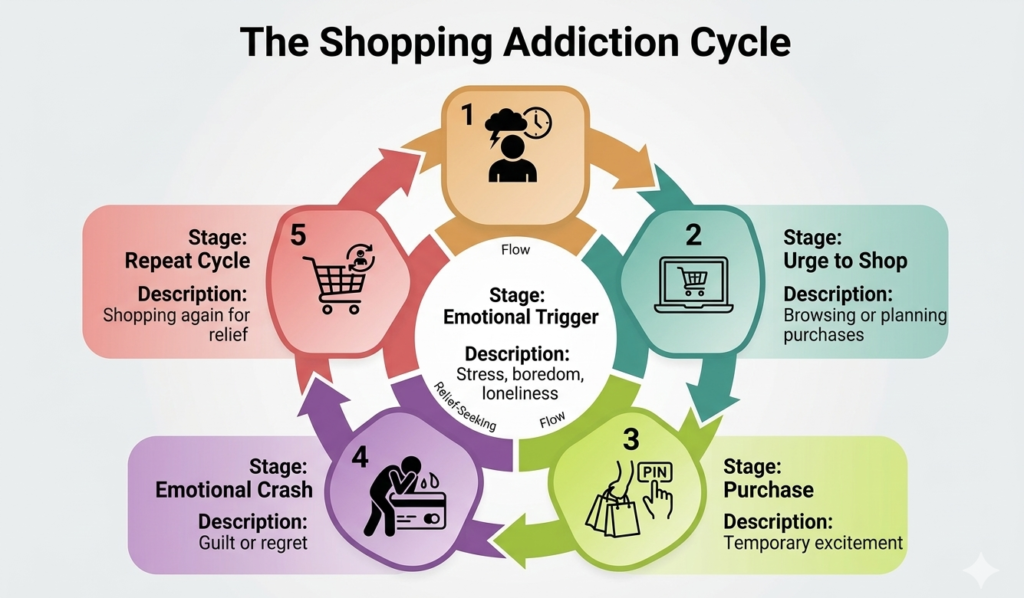
Shopping addiction often follows a predictable cycle:
| Stage | Feeling |
|---|---|
| Before purchase | Excitement or anticipation |
| During purchase | Emotional “high” |
| After purchase | Guilt or regret |
Many compulsive buyers experience intense regret shortly after buying something they didn’t truly need.
Research indicates post-purchase guilt is common among compulsive buyers, reinforcing the emotional cycle of addiction.
What to Do
Track your emotions before and after purchases.
Keeping a spending journal helps you recognize patterns in your behavior.
5. Your Debt Is Increasing
One of the most serious consequences of shopping addiction is financial damage.
Compulsive shoppers often rely heavily on credit cards, with over 70% using credit to fund purchases.
Signs include:
-
Rising credit card balances
-
Late payment fees
-
Borrowing money to cover purchases
-
Using “Buy Now, Pay Later” services excessively
Debt Growth Example
| Month | Credit Card Balance |
|---|---|
| January | $2,000 |
| March | $3,200 |
| June | $5,100 |
| September | $7,400 |
Without intervention, this pattern can quickly spiral into long-term debt.
What to Do
Create a strict spending plan:
-
Freeze unnecessary spending
-
Pay off high-interest debt first
-
Consider the debt avalanche or snowball method
6. Shopping Is Always on Your Mind
Do you constantly think about your next purchase?
Compulsive buyers often spend hours:
-
Browsing online stores
-
Comparing prices
-
Watching product reviews
-
Adding items to wish lists
One study even suggests online shopping environments increase impulsive purchases by about 23% due to easy checkout systems.
What to Do
Reduce triggers by:
-
Unsubscribing from marketing emails
-
Removing shopping apps from your phone
-
Avoiding retail websites during free time
Less exposure means fewer temptations.
7. You Buy Things Just Because They’re on Sale
Sales and discounts are powerful psychological triggers.
Retailers use phrases like:
-
“Limited time offer”
-
“Only 3 left in stock”
-
“Flash sale”
These tactics create urgency and fear of missing out (FOMO).
However, buying something you don’t need—even at a discount—is still wasted money.
What to Do
Ask yourself one simple question:
“Would I buy this if it were full price?”
If the answer is no, skip it.
8. Shopping Is Hurting Your Relationships
Money conflicts are one of the leading causes of relationship stress.
Studies suggest financial arguments occur in about 73% of relationships where one partner has compulsive buying habits.
Signs include:
-
Arguments about spending
-
Hiding credit card statements
-
Financial stress affecting family decisions
What to Do
Create a shared financial plan with your partner:
-
Monthly spending limits
-
Joint savings goals
-
Regular money check-ins
Open communication reduces conflict and builds trust.
9. You’ve Tried to Stop — But Can’t
Perhaps the clearest sign of shopping addiction is repeated failed attempts to stop.
Many people promise themselves:
-
“This will be my last purchase.”
-
“I’ll stop next month.”
-
“I’ll only buy essentials.”
But the urge returns.
Research shows nearly 29% of compulsive buyers attempt to quit but relapse repeatedly, highlighting the addictive nature of the behavior.
What to Do
If self-control alone isn’t enough, consider professional help:
-
Financial counseling
-
Cognitive behavioral therapy (CBT)
-
Support groups like Debtors Anonymous
Therapy can address the emotional triggers behind compulsive spending.
How to Break a Shopping Addiction?
Recovering from shopping addiction doesn’t happen overnight. But small changes can make a huge difference.
Practical Steps to Regain Control
1. Track Every Expense
Awareness is powerful. Write down every purchase for 30 days.
2. Set a Monthly Spending Limit
Give yourself a controlled “fun budget” to avoid total deprivation.
3. Use Cash Instead of Credit
Credit cards make spending feel less real.
4. Avoid Shopping Triggers
Unsubscribe from retailer emails and marketing notifications.
5. Replace Shopping with Healthy Activities
Try hobbies like:
-
Reading
-
Exercising
-
Cooking
-
Learning new skills
6. Seek Support
Talking about your struggles can help reduce shame and build accountability.
Turning Awareness Into Action
Shopping addiction often hides behind phrases like “retail therapy” or “treat yourself.”
But when spending becomes a way to cope with emotions or escape stress, it can lead to:
-
Debt
-
Anxiety
-
Relationship conflict
-
Financial instability
The good news is that recognizing the problem is the first step toward solving it.
By building awareness, setting boundaries, and addressing emotional triggers, you can transform your relationship with money and regain control of your financial future.
Remember: financial freedom isn’t about buying more—it’s about needing less.
Sources