
Key Points
- 80–85% Savings: Generic pet meds offer the same medical benefits as name brands but at a fraction of the cost because they lack high research and marketing overhead.
- FDA-Approved Quality: Generics must meet strict “bioequivalence” standards, ensuring they deliver the same active ingredients at the same rate as the original drug.
- When to Stay Branded: Stick with name brands for medications requiring hyper-precise dosing, brand-new formulas, or specialized flavors for picky pets.
If you’ve ever picked up a prescription for your pet and felt your jaw drop at the price, you’re definitely not alone. Pet care costs in the U.S. have been steadily rising, and medications are one of the biggest contributors. According to the U.S. Food and Drug Administration (FDA), generic drugs typically cost 80–85% less than their brand-name counterparts while delivering the same therapeutic effect. At the same time, nearly 9 out of 10 prescriptions filled in the U.S. are generics—showing just how widely trusted and used they are.
But when it comes to your dog, cat, or any furry companion, saving money isn’t the only concern. You want to be sure you’re not compromising their health for the sake of your budget. So, how do you decide when it’s safe to go generic—and when sticking with a brand name is the better choice?
Let’s break it down in a practical, pet-owner-friendly way.
 Related: New Puppy, New Budget: A First-Year Financial Checklist for Pet Owners
What Are Generic and Brand-Name Pet Medications?
Brand-name medications are the original drugs developed and marketed by pharmaceutical companies. These medications go through extensive research, clinical trials, and regulatory approval processes before becoming available. That process is long and expensive, which is why brand-name drugs often come with a higher price tag.
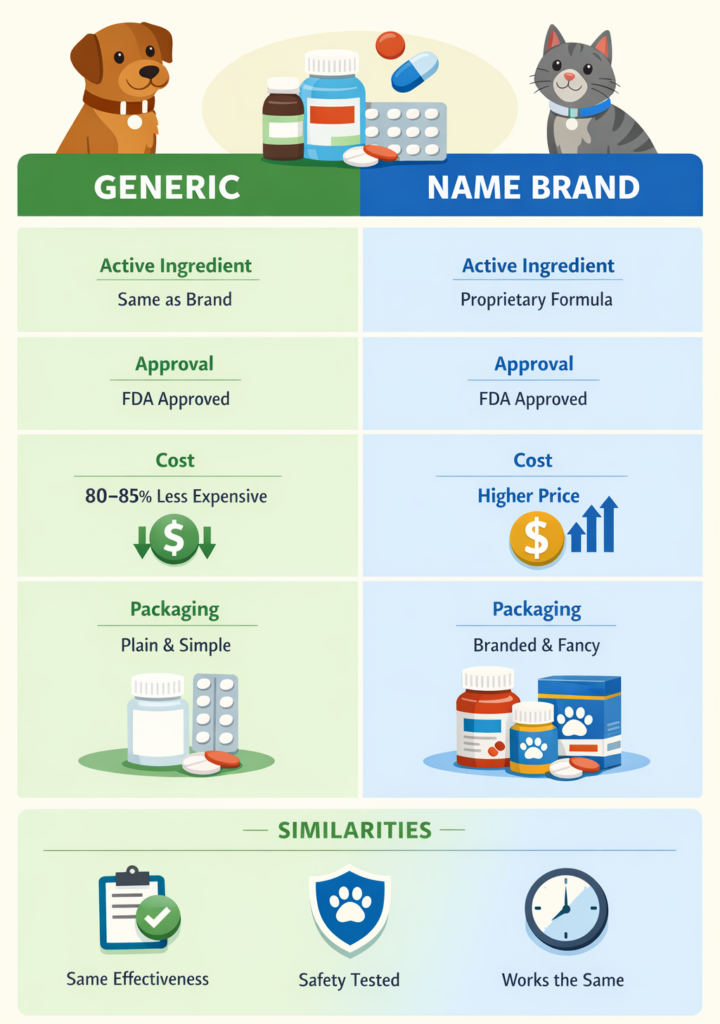
Generic medications, on the other hand, are introduced after the original drug’s patent expires. They contain the same active ingredient, strength, and dosage form as the brand-name version. To be approved, generics must meet strict standards to ensure they work the same way in the body.
Think of it like buying store-brand groceries instead of name brands. The packaging may differ, but the essential product is often nearly identical.
Are Generic Pet Meds Really Safe?
This is the number one question most pet owners have—and it’s a valid concern.
In most cases, generic pet medications are just as safe and effective as brand-name drugs. They must demonstrate what’s called “bioequivalence,” meaning they deliver the same amount of active ingredient into the bloodstream in the same amount of time as the original drug.
That said, there can be minor differences. Generic drugs may include different inactive ingredients such as fillers, dyes, or flavoring agents. These differences usually don’t affect how the medication works, but they can matter if your pet has allergies or sensitivities.
For the vast majority of pets, though, generics perform just as well as their brand-name counterparts.
Why Are Generic Pet Medications So Much Cheaper?
The dramatic price difference between generic and brand-name medications often surprises pet owners. But the reason is fairly simple.
Brand-name drugs are expensive because they include the costs of research, development, testing, and marketing. Once the patent expires, other manufacturers can produce the same medication without those initial costs.
This increased competition drives prices down significantly. Over time, generics have saved billions in healthcare costs across the U.S.—and that includes veterinary care.
For pet owners managing long-term conditions like arthritis, diabetes, or thyroid issues, switching to generics can lead to substantial savings year after year.
Below is a quick comparison table:
| Feature | Generic Pet Medications | Name Brand Pet Medications |
|---|---|---|
| Active Ingredient | Same as brand-name | Original formula |
| Effectiveness | Equal in most cases | Proven through initial trials |
| Safety Standards | FDA-approved, must meet strict guidelines | FDA-approved with full clinical testing |
| Cost | 80–85% cheaper on average | Significantly more expensive |
| Appearance | May differ in color, size, or shape | Consistent branded look |
| Inactive Ingredients | May vary slightly (fillers, dyes) | Fixed formulation |
| Availability | Widely available after patent expires | Available during and after patent period |
| Flavor/Formulation | Basic, may lack pet-friendly flavors | Often flavored for pets (easier to give) |
| Manufacturer | Multiple manufacturers | Single original manufacturer |
| Best For | Long-term treatments, stable conditions | New drugs, sensitive pets, precise dosing cases |
When You Can Safely Save with Generic Pet Meds
There are many situations where choosing a generic medication is not only safe but also a smart financial move.
You can usually opt for a generic when your veterinarian confirms it’s an approved alternative and your pet’s condition is stable. Generics tend to work especially well for common, well-established treatments where the drug has been on the market for years.
Typical examples include antibiotics, anti-inflammatory medications, pain relievers, and thyroid drugs. In these cases, most pet owners notice no difference in results—just a noticeable drop in cost.
If your pet has been taking a medication for a while without issues, switching to a generic version is often a smooth and safe transition.
When It’s Better to Stick with Brand-Name Medications
Even though generics are widely reliable, there are certain situations where brand-name medications are the better choice.
Some drugs require very precise dosing, and even slight variations can affect how well they work. These are known as medications with a narrow therapeutic range. In such cases, consistency is critical, and your vet may recommend sticking with the original brand.
You may also want to avoid switching if the medication is relatively new and doesn’t yet have a proven generic alternative. Additionally, if your pet has previously reacted poorly to a generic version, it’s best to stay with what works.
Another important factor is formulation. Some brand-name medications are specifically designed for pets, including flavored options that make them easier to administer. If your dog refuses pills or your cat is particularly picky, a flavored brand medication might save you time and frustration.
Key Differences Pet Owners Should Know
Even though generic and brand-name medications are medically equivalent, they’re not always identical in appearance or composition.
Generics may look different in terms of color, size, or shape. They may also come from different manufacturers, which can lead to slight variations in inactive ingredients.
These differences rarely affect effectiveness, but they can influence how your pet tolerates the medication. For example, a different filler might upset a sensitive stomach, or a change in flavor could make the medication harder to give.
Being aware of these differences helps you monitor your pet more closely when switching medications.
What Veterinarians Recommend
Most veterinarians are comfortable prescribing generic medications when appropriate. However, they strongly emphasize the importance of consulting them before making any changes.
Pets process medications differently than humans, and not all drugs are interchangeable across species. What works safely for people may not always be suitable for animals without proper guidance.
Your veterinarian will consider your pet’s age, weight, health history, and current medications before recommending a generic option. In many cases, they may suggest starting with a generic and only switching to a brand-name drug if needed.
The key takeaway is simple: never switch medications without professional advice.
How to Save Even More on Pet Medications
Choosing generics is just one way to reduce your pet care costs. There are several other strategies that can help you save without sacrificing quality.
You can ask your vet if a human-approved generic version is safe for your pet, as these are often more affordable. Comparing prices across online pet pharmacies can also reveal significant savings.
Many manufacturers offer coupons or discount programs, so it’s worth checking before making a purchase. Buying the right quantity—without overstocking—can prevent waste and unnecessary spending.
If you have pet insurance or a wellness plan, reviewing your coverage for medications can also help lower out-of-pocket costs.
The Bottom Line: Smart Savings Without Compromise
Choosing between generic and brand-name pet medications doesn’t have to be complicated. In most cases, generics provide the same safety and effectiveness at a fraction of the cost, making them a practical choice for many pet owners.
However, there are times when sticking with a brand-name medication is the safer option, especially for more complex conditions or sensitive pets.
The best approach is to stay informed, work closely with your veterinarian, and make decisions based on your pet’s specific needs. Saving money is important—but your pet’s health always comes first.
FAQs: Generic vs. Name Brand Pet Medications
Are generic pet medications as effective as brand-name drugs?
Yes, in most cases, generic pet medications are just as effective as brand-name drugs. They contain the same active ingredients and must meet strict regulatory standards to ensure they work the same way in your pet’s body. The main differences are usually in packaging, price, and inactive ingredients.
Why are generic pet medications cheaper?
Generic medications are cheaper because manufacturers don’t have to spend money on research, development, and marketing. Once a brand-name drug’s patent expires, other companies can produce the same formula, which increases competition and lowers prices.
Can I switch my pet to a generic medication without asking my vet?
No, you should always consult your veterinarian before switching. Even though generics are generally safe, your vet needs to consider your pet’s specific health condition, dosage requirements, and any potential sensitivities.
Are there any risks with generic pet medications?
For most pets, generics are safe. However, some pets may react differently due to variations in inactive ingredients like fillers or dyes. In rare cases, these differences can cause mild side effects or reduce how well the medication works.
When should I avoid using generic medications for my pet?
You should avoid switching to generics if your pet requires precise dosing, is on a newly developed medication, or has previously had a bad reaction to a generic version. In these cases, your veterinarian may recommend sticking with the brand-name drug.
Do generic pet medications look different from brand-name ones?
Yes, generic medications often look different in color, size, or shape. This does not affect how they work, but it’s important to double-check labels to ensure you’re giving the correct medication.
Can pets take human generic medications?
Some human generic medications are safe for pets, but only under veterinary guidance. Never give your pet human medication without approval, as some drugs that are safe for humans can be toxic to animals.
Sources: