

Your refrigerator runs 24 hours a day, 365 days a year — more than almost any other appliance in your home. That constant operation means its energy use has a real impact on your electric bill.
When you compare the long-term costs of continuing to run an old fridge versus upgrading to a newer model, the savings potential becomes hard to ignore.
But the decision isn’t just about lowering your bill — it’s about cost per use, lifespan, performance, and environmental impact. An older refrigerator may still function, but if it’s consistently driving up your energy costs and requiring more maintenance, it might be costing you more overall than the price of a new one. In this blog, we’ll break down how much you could save with a new fridge, what factors affect those savings, and how to calculate whether an upgrade makes financial sense for your household.
🧊 Why Old Refrigerators Cost More
Older refrigerators often lack the efficient technology found in newer models. Components like compressors, insulation, and temperature controls have improved significantly over the past decade.
| 🔥 Factor | 📉 Old Fridge | 💡 New Fridge |
|---|---|---|
| Insulation quality | Lower | Higher |
| Compressor efficiency | Older tech | Energy-efficient |
| Temperature control | Basic | Advanced |
| Operating cost | Higher | Lower |
Because older models are less efficient, they need more energy to maintain cool temperatures — which means higher monthly bills.
⚡ How Much Energy Do Fridges Use?
Understanding how much energy your refrigerator uses is key to estimating savings. Here’s a general breakdown:
| 🧾 Refrigerator Type | 📉 Annual Energy Use (kWh) | 💵 Est. Annual Cost |
|---|---|---|
| Old Fridge (10+ yrs) | ~700–1,200 kWh | ~$80–$150 |
| New Standard Model | ~400–600 kWh | ~$45–$75 |
| New ENERGY STAR Model | ~300–500 kWh | ~$34–$60 |
These figures are based on average U.S. electricity rates and typical usage. Newer ENERGY STAR fridges can use up to 40% less energy than older units, translating to real savings on your monthly electric bill.
Comparing Your Current Refrigerator
To see how your existing fridge stacks up, consider using the ENERGY STAR Flip Your Fridge Calculator.
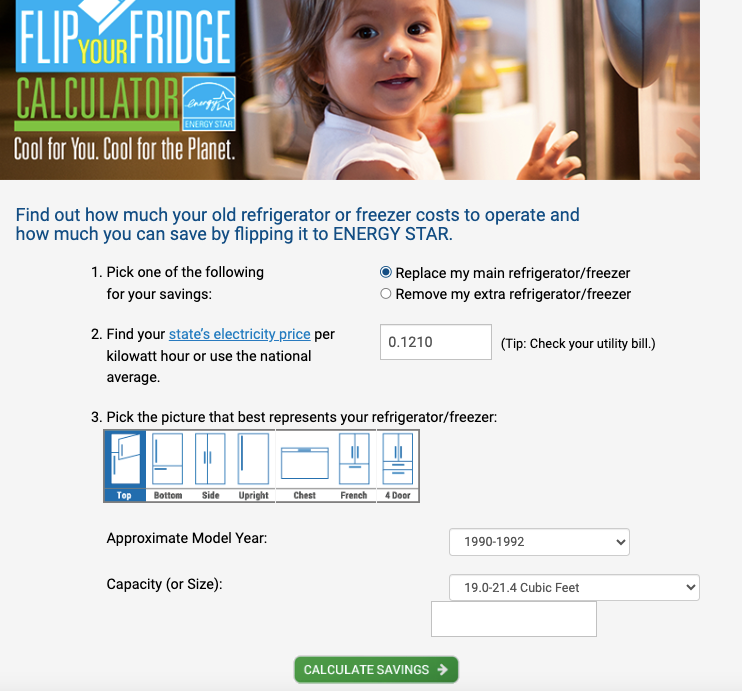
This tool estimates how much energy your current refrigerator uses based on factors like its age, size, style, and your local electricity rates. It gives you a quick snapshot of potential savings if you upgrade to a more efficient model. For the most accurate comparison, check your latest utility bill to confirm your current electricity price before entering the details.
📊 What You Could Save
Upgrading to a new ENERGY STAR-rated refrigerator might:
-
Cut your fridge’s energy use by 20–40% compared to older models
-
Save $100–$300+ in energy costs over 5–12 years
-
Reduce overall home electricity consumption (fridges run 24/7!)
ENERGY STAR estimates that replacing old inefficient models with new certified units could collectively save millions in energy costs nationwide and reduce billions of pounds of carbon emissions.
💰 Long-Term Savings: Old vs. New
Let’s look at a practical example comparing refrigeration costs over 10 years — a typical lifespan for a modern fridge:
| 📅 Time Period | 🧊 Old Fridge | 🧊 New ENERGY STAR Fridge | 💵 Lifetime Savings |
|---|---|---|---|
| 1 year | $100 | $50 | $50 |
| 5 years | $500 | $250 | $250 |
| 10 years | $1,000 | $500 | $500 |
In the chart above, a new ENERGY STAR refrigerator could save you around $500 in energy costs alone over a decade — and that doesn’t include potential rebates or reduced maintenance costs.
🌎 Other Ways New Fridges Deliver Value
Electricity savings are just one part of the picture. Here are additional benefits of upgrading:
🔧 Less Maintenance
Older fridges may require more repairs as parts wear out. A new unit typically comes with a warranty and lower maintenance costs in the early years.
📦 Better Technology
New fridges have features like:
-
Improved temperature zones
-
Adaptive defrost cycles
-
More consistent cooling
These not only conserve energy but also keep food fresher longer, reducing waste.
🌱 Environmental Impact
Lower energy use also means a smaller carbon footprint. A more efficient fridge uses less electricity — which often results in fewer greenhouse gas emissions, especially if your electricity is partly sourced from fossil fuels.
🏷️ Upfront Cost vs. Long-Term Savings
One barrier to upgrading is the upfront cost of a new fridge. But when you look at total cost of ownership (TCO) — purchase price plus energy costs minus savings — the math becomes clearer.
| 💵 Expense | 🧊 Old Fridge | 🧊 New Fridge |
|---|---|---|
| Purchase Price | Already paid | $800–$2,500 |
| Annual Energy Cost | $80–$150 | $34–$75 |
| 10-Year Energy Cost | $800–$1,500 | $340–$750 |
| Total Cost (10 yrs) | $800+ | $1,140–$3,250 |
At first glance, the new fridge may look more expensive — but the ongoing savings in energy plus fewer repairs can make up for the initial cost over time, especially if you plan to stay in your home long-term.
📈 When a New Fridge Makes Sense
Consider replacing your refrigerator if:
✅ It’s more than 10 years old
✅ Your energy bills are consistently high
✅ It runs constantly or makes noise
✅ Repairs are becoming frequent or costly
✅ You’re planning to stay in your home for several years
These are signs your fridge may be costing more than it’s worth.
💡 When to Wait
It might make sense to delay replacing your fridge if:
⚠️ You plan to move soon
⚠️ Your old fridge is still running efficiently
⚠️ You have significant upfront budget constraints
⚠️ You find a highly efficient used appliance with warranty
In some cases, repairs or temporary fixes can extend the fridge’s life without a big investment — but this works best when the unit is already reasonably efficient.
💰 Tips to Maximize Savings
Here’s how to get the most out of a new, energy-efficient fridge:
🧊 Choose ENERGY STAR certified models
These are independently tested and proven to use less electricity.
🧼 Maintain it well
Clean coils, check seals, and avoid overfilling.
🧾 Use smart settings
Many modern models have power-saving modes, holiday settings, and adaptive defrost.
📦 Size matters
Buy a fridge that fits your actual needs — oversized models use more energy.
📌 New Fridge: Smart Long-Term Choice
Whether a new refrigerator saves you money in the long run depends on your current unit’s age, efficiency, usage patterns, and how long you plan to keep it. But for most households with old, inefficient models, an upgrade to a modern, energy-efficient refrigerator brings real financial and environmental benefits.
You may pay more at the checkout initially, but less energy use, lower maintenance, better technology, and potential rebates all contribute to making a new fridge a smart long-term choice.