

Key Points
- Travel smarter, not more: Americans are choosing shorter, budget-friendly trips.
- Save while traveling: Early booking, rewards, and cheaper destinations cut costs.
- New trends: Micro-trips, staycations, and workcations are rising.
Spring is no longer just about taking a break—it’s about traveling smarter, spending wisely, and maximizing experiences without draining your bank account.
In 2026, Americans are embracing travel like never before. A record 171 million passengers are expected to fly this spring, marking a 4% increase from last year . At the same time, 93% of Americans are planning to travel this year, showing just how strong the demand is .
But here’s the twist: while travel demand is booming, budgets are tightening.
- The average traveler spent about $2,261 per trip in 2025
- Yet, travel budgets dropped 18% year-over-year for many households
- And over 50% of Americans now actively follow a budget in 2026
👉 This shift is redefining how Americans approach vacations.
Instead of canceling trips, people are cutting costs, shortening stays, and finding creative ways to travel affordably. The result? A new era of budget-smart travel.
 Related: Got Wandering Feet? 10 Clever Vacation Savings Hacks You’ve Never Tried
✈️ Why Spring Travel Is Booming Despite Rising Costs
At first glance, it seems contradictory—travel costs are rising, yet more people are traveling.
Here’s why:
1. Travel Is Now a Priority, Not a Luxury
Nearly half of Americans (49%) prioritize travel when making financial decisions . Experiences are now valued more than material purchases.
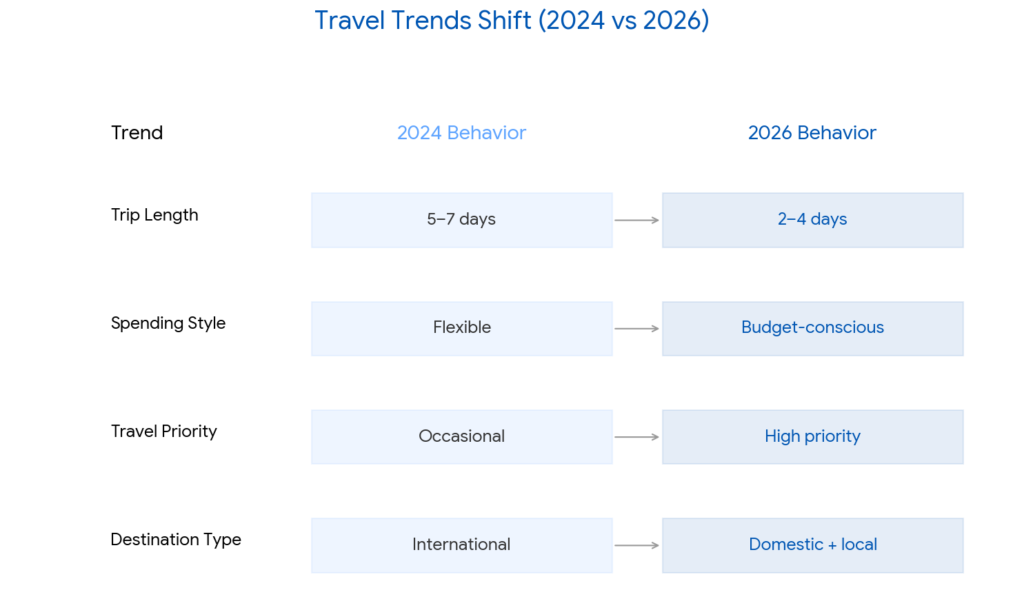
2. Shorter, Smarter Trips
Instead of long vacations, travelers are choosing:
- 2–4 day getaways
- Weekend trips
- Nearby destinations
This helps reduce costs while still satisfying the urge to travel.
3. The “Whycation” Trend
Travel is becoming more intentional. According to industry insights, people now travel to:
- Recharge mentally
- Reconnect with family
- Experience something meaningful
Travel Trends Shift (2024 vs 2026)
💰 How Americans Are Saving Money on Spring Vacations
Travelers in 2026 are not spending less—they’re spending smarter.
1. Booking Earlier (or Smarter)
With rising airfare (average domestic round-trip around $800+), travelers are:
- Booking 1–3 months in advance
- Using price alerts
- Comparing multiple platforms
👉 Early booking = better deals + less stress.
2. Using Points, Rewards & Cashback
Loyalty programs are a game-changer.
- Over 57% of Americans are enrolled in travel rewards programs
- Many use points for flights, hotels, and upgrades
💡 Example:
Instead of paying $500 for flights, travelers redeem points and pay near $0.
3. Choosing Budget-Friendly Destinations
Instead of expensive hotspots, travelers are choosing:
- National parks
- Smaller beach towns
- Off-season cities
This reduces:
- Hotel costs
- Food expenses
- Tourist markups
4. Traveling Midweek
Flights and hotels are often cheaper:
- Tuesday–Wednesday departures
- Avoiding weekends and peak days
👉 Savings can reach 20–30% compared to weekend travel.
🚗 Road Trips vs Flights: The Smart Choice in 2026
With gas prices fluctuating (around $3.50–$3.79 per gallon recently), many Americans are reconsidering how they travel.
✈️ Flying Pros:
- Faster
- Better for long distances
🚗 Road Trip Pros:
- More flexible
- No baggage fees
- Often cheaper for families
📊 Cost Comparison Example
| Expense Type | Flight (Per Person) | Road Trip (Family of 4) |
|---|---|---|
| Transportation | $300–$800 | $150–$300 gas |
| Baggage Fees | $50–$150 | $0 |
| Flexibility | Low | High |
👉 For families, road trips are often the clear winner.
🧠 The Psychology of Smarter Travel Spending
Americans are becoming more mindful about how they spend on travel.
Recent surveys show:
- Only 21% of travelers say viral travel trends always meet expectations
- Cost and value matter more than social media hype
Key Mindset Shifts:
✔ Spending on experiences, not luxury
✔ Avoiding “Instagram pressure” trips
✔ Planning with intention
👉 This leads to more satisfaction and less financial stress.
🏡 Rise of Staycations & Local Travel
Not every vacation requires a flight.
In fact:
- Over 50% of Americans are choosing staycations or nearby trips
Why Staycations Are Trending:
- No airfare
- Lower accommodation costs
- Less planning
💡 Budget Staycation Ideas:
- Weekend Airbnb nearby
- Local hiking or beach trip
- City exploration days
🧾 Budget Planning for a Spring Vacation
If there’s one habit defining 2026 travelers, it’s this:
👉 They plan their money before they plan their trip.
Step-by-Step Budget Plan
1. Set a Total Budget
Example:
- Total budget: $1,500
2. Break It Down
| Category | Budget |
|---|---|
| Flights | $500 |
| Hotel | $600 |
| Food | $250 |
| Activities | $150 |
3. Add a Buffer
Always include:
- 10–15% extra for emergencies
4. Track Spending
Use:
- Budget apps
- Notes or spreadsheets
⚠️ Common Spring Travel Mistakes (That Cost You Money)
Avoid these costly errors:
❌ Booking Last-Minute Flights
Prices spike significantly closer to departure.
❌ Overpacking (Baggage Fees)
Stick to carry-on when possible.
❌ Ignoring Travel Insurance
Unexpected cancellations can cost hundreds.
❌ Overspending on Food
Dining out every meal adds up quickly.
🌍 Smart Travel Trends to Watch in 2026
✈️ 1. Short “Micro-Trips” Are Replacing Long Vacations
The biggest shift in 2026 isn’t whether Americans travel—it’s how long they travel.
📊 What the data shows:
- 1–2 day trips are rapidly increasing, especially among younger travelers
- Gen Z is leading the trend by taking quick international city breaks instead of long vacations
- Travel reports show people are cutting trip length due to financial concerns
💡 Why Micro-Trips Are Growing
1. Budget Pressure
- Rising travel costs (flights, hotels, food) are forcing shorter trips
- Instead of canceling travel, people are reducing duration
2. Limited PTO (Paid Time Off)
- Many Americans prefer multiple short trips over one long vacation
3. “High-Impact Travel” Mindset
- Travelers now want maximum experience in minimum time
(e.g., weekend city exploration, quick beach trips)
🌿 2. Nature-Based Travel Is Booming (Big Time)
In 2026, Americans are actively moving away from crowded tourist hotspots and toward nature and outdoor experiences.
📊 What the data shows:
- Interest in national parks surged by 35%
- 24% of travelers plan hiking trips
- Outdoor and nature bookings are outpacing all other travel categories
💡 Why Nature Travel Is Trending
1. It’s More Affordable
- No expensive resorts
- Lower accommodation costs (camping, cabins, budget stays)
2. Mental Health & Wellness
- Travelers are prioritizing restoration and stress relief
- Nature trips offer a “digital detox”
3. Avoiding Crowds (and Costs)
- Popular cities = expensive
- National parks = cheaper and less crowded (relatively)
💻 3. Work + Vacation (“Workcations”) Are Becoming Normal
The line between work and travel is officially blurred.
📊 Supporting data:
- About 30% of Americans plan to use AI and tech for travel planning, showing how digital lifestyles are merging with travel
- Surveys show over 50% of workers are open to working remotely while traveling
- Nearly 48% of travelers extend work trips into vacations (“bleisure”)
💡 Why Workcations Are Rising
1. Remote Work Is Here to Stay
- Hybrid and remote jobs allow flexibility
- People can work from:
- Hotels
- Airbnbs
- Cafés
2. Saves Money
- Fewer vacation days used
- Combine business + leisure expenses
3. Longer, More Flexible Travel
- Stay longer without “losing income”
- Travel becomes more sustainable financially
🏁 Travel Is No Longer About Luxury—It’s About Strategy
Spring vacations in 2026 are not about spending more—they’re about spending smarter.
Despite rising costs and economic uncertainty, Americans are proving that travel is still possible with the right strategy by planning ahead, budgeting carefully and choosing smarter options
👉 You can enjoy a memorable spring vacation without financial stress.
Because at the end of the day, the best trips aren’t the most expensive ones—they’re the ones that are well-planned, meaningful, and within your means.
Sources