

Key Points
- Online shopping triggers dopamine, which makes it addictive—but the feeling is short-lived.
- Replacing shopping with free “dopamine swaps” helps reduce impulse spending without feeling deprived
- Small habit changes can improve both your financial health and emotional well-being
If you’ve ever opened a shopping app “just to browse” and ended up checking out, you’re not alone. In fact, online shopping isn’t just about buying things anymore—it’s deeply tied to how our brain works. Studies show that shopping activates the brain’s reward system, releasing dopamine—the same “feel-good” chemical linked to pleasure and motivation.
Recent data reveals just how powerful this effect is. Around 92% of compulsive shoppers admit they buy primarily to boost their mood, and dopamine levels can spike by up to 50% during the anticipation of a purchase.
That’s why online shopping feels so good in the moment—and why it can become a habit so quickly. But here’s the catch: the high fades fast, often leaving behind regret, clutter, or even financial stress.
The good news? You don’t have to eliminate that dopamine boost—you just need to redirect it.
Welcome to the “dopamine swap.”
 Related: The 48-Hour No-Spend Weekend: A Step-by-Step Guide to Resetting Your Dopamine
What Is a Dopamine Swap?
A dopamine swap means replacing a spending habit with a free activity that gives your brain a similar reward. Instead of fighting the urge, you redirect it into something healthier and more sustainable.
Shopping gives you:
- Anticipation
- Novelty
- Reward
But these same feelings can come from everyday activities—without spending a single dollar.
Instead of fighting the urge, you’re simply rewiring it.
Quick Insight: Your brain isn’t craving shopping—it’s craving stimulation, novelty, and reward.
Why Online Shopping Feels So Addictive
There’s a reason scrolling through deals or adding items to your cart feels oddly satisfying.
When you shop, your brain responds to:
- Newness and discovery
- The thrill of a “good deal”
- The anticipation of receiving something
This creates a dopamine surge, similar to other reward-based behaviors.
But the cycle often looks like this:
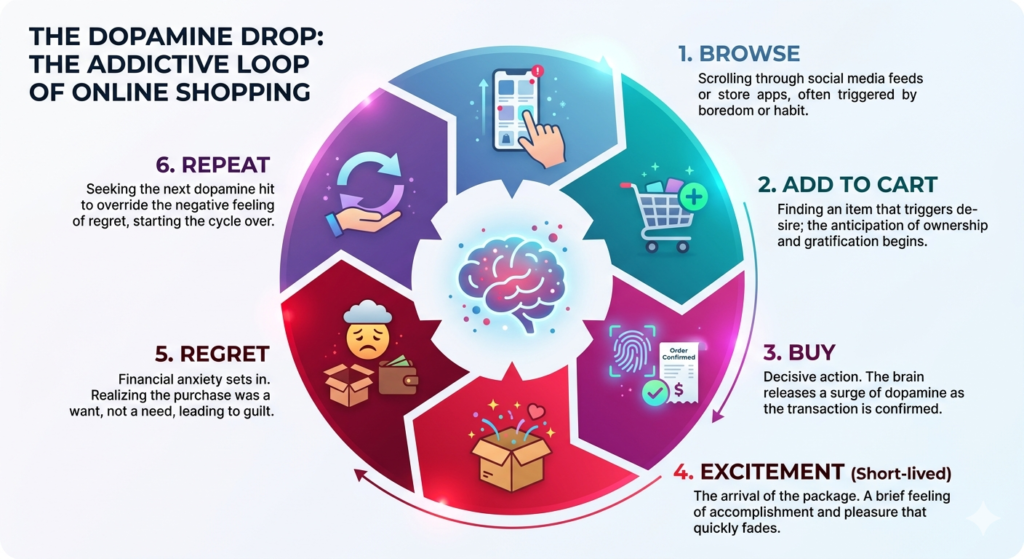
Breaking this loop isn’t about discipline—it’s about substitution.
10 Free Dopamine Swaps to Replace Online Shopping
1. Go for a “Micro-Adventure” Walk
Instead of scrolling through products, step outside—even for 10 minutes.
Exploring a new street, park, or neighborhood gives your brain the same sense of novelty that shopping does. You’re still “discovering” something—but it’s real, not virtual.
2. Create a Wishlist Without Buying
If you love browsing, don’t stop—just remove the checkout step.
Create a “fantasy cart” or wishlist. This still gives you the dopamine hit of discovery and planning, without the financial consequences.
You’ll be surprised how many items you forget about within a few days.
3. Rearrange or Refresh Your Space
That urge to “buy something new”? It’s often really a desire for change.
Try:
- Rearranging furniture
- Switching decor between rooms
- Decluttering a small area
You’ll get that same “new environment” feeling—without spending money.
4. Try a 15-Minute Creative Sprint
Creativity is one of the most powerful natural dopamine boosters.
You don’t need to be artistic. Try:
- Journaling
- Sketching
- Writing ideas
- Brainstorming goals
The key is starting small—just 15 minutes.
5. Exercise (Even Light Movement Counts)
You’ve heard this before—but it works.
Physical activity releases dopamine, endorphins, and serotonin—all mood boosters.
Even a quick:
- Walk
- Stretch session
- Dance break
can shift your mindset faster than clicking “Buy Now.”
6. Play a Game or Solve a Challenge
Shopping gives your brain a sense of reward.
So do:
- Puzzles
- Brain games
- Mobile games (in moderation)
- Trivia quizzes
These provide achievement-based dopamine instead of consumption-based dopamine.
7. Connect With Someone
Sometimes, the urge to shop is really about emotional needs—like boredom, loneliness, or stress.
A quick:
- Text
- Call
- Coffee chat
can deliver a deeper and longer-lasting emotional reward than any purchase.
8. Watch or Learn Something New
That urge to scroll? Redirect it into learning.
Try:
- YouTube tutorials
- Short educational videos
- Documentaries
Your brain still gets stimulation—but with added value.
9. Do a “Mini Productivity Reset”
Instead of buying something to feel productive, actually be productive.
Pick one small task:
- Clean a drawer
- Organize your phone
- Reply to emails
Completing tasks triggers dopamine through accomplishment—not spending.
10. Practice the 24-Hour Pause Rule
This isn’t about eliminating shopping—it’s about slowing it down.
When you feel the urge to buy:
- Add the item to your cart
- Wait 24 hours
In many cases, the desire fades once the dopamine rush passes.
Why This Works Better Than “No Spending”
Completely cutting off shopping can backfire.
Your brain still craves stimulation, which can lead to:
- Binge spending later
- Replacing one habit with another
A dopamine swap works because it:
- Keeps the reward system active
- Reduces financial damage
- Builds healthier habits over time
The Emotional Payoff of Dopamine Swaps
When you stop relying on shopping for emotional boosts, something powerful happens.
You start to:
- Feel more in control of your money
- Experience longer-lasting satisfaction
- Reduce impulse decisions
- Build awareness of your triggers
Over time, the urge to shop doesn’t disappear—but it weakens.
You Don’t Need to Quit—Just Swap!
Online shopping isn’t the enemy. It’s just one of the easiest ways to access dopamine in today’s world.
But easy doesn’t always mean healthy.
By swapping—not suppressing—the habit, you create a system that works with your brain instead of against it.
Start small. Pick one alternative. Try it the next time you feel the urge to browse.
You might not just save money—you might feel better, too.
Sources:
Scientific American – The Psychology of Shopping Addiction
WifiTalents – Online Shopping Addiction Report
Psychology Today – Dopamine and Shopping Behavior
Net Psychology – Online Shopping Addiction Insights