

Key Points:
🌸 Plan early and set a clear vacation budget to avoid overspending.
✈️ Travel on flexible dates and choose affordable or nearby destinations to reduce costs.
🏡 Save on food and activities by cooking some meals and enjoying free local attractions.
Spring break trips alone can cost around $5,325 on average, reflecting a growing willingness among Americans to prioritize travel despite inflation.
Family travel budgets have also grown. Surveys show that American families spend roughly $8,000 annually on travel, with lodging, transportation, and activities accounting for the largest expenses.
For many households, the key challenge is finding ways to enjoy a memorable vacation without overspending. The good news is that with smart planning and a few budget-friendly strategies, families can significantly reduce travel costs while still having an amazing spring getaway.
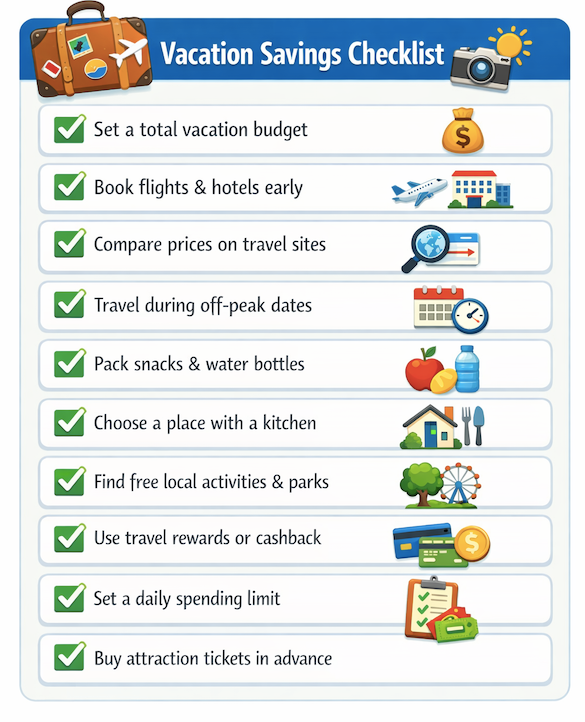
 Related: How I Saved for My Dream Vacation Without Feeling Broke
🌸 Why Spring Vacations Can Get Expensive
Spring is one of the most popular travel seasons in the United States because it coincides with school breaks and pleasant weather in many destinations. This high demand often leads to higher prices for flights, hotels, and attractions.
Common expenses during spring vacations include:
| 🌍 Vacation Expense | 💰 Average Cost Range |
|---|---|
| ✈️ Flights | $300 – $800 per person |
| 🏨 Hotels | $150 – $400 per night |
| 🍽 Food & Dining | $600 – $900 per week |
| 🎟 Attractions & Activities | $200 – $1,200 per trip |
| 🚗 Transportation | $400 – $1,800 depending on travel type |
Families who plan ahead and make a few strategic choices can often cut these costs by hundreds or even thousands of dollars.
✈️ Book Travel Early for the Best Deals
One of the easiest ways to save money on spring vacations is by booking early. Prices for flights and accommodations usually increase as the travel date approaches, especially during school breaks.
Planning three to five months ahead can help families secure lower prices and better options.
Here are a few tips to reduce booking costs:
-
Compare prices across multiple travel sites
-
Use flexible travel dates if possible
-
Set flight price alerts
-
Book midweek flights instead of weekends
Even shifting your travel dates by a day or two can lead to significant savings.
🚗 Consider Road Trips Instead of Flights
For many families, road trips are one of the most affordable vacation options. Driving can be significantly cheaper than flying, especially for larger families.
Transportation costs for driving average around $650 per trip, while flying can cost around $1,800 for the same travel period.
Road trips also provide additional benefits:
-
No baggage fees
-
Flexible travel schedules
-
Opportunity to visit multiple destinations
-
Lower overall transportation costs
Families can also pack snacks and meals to reduce food expenses during long drives.
🏨 Choose Budget-Friendly Accommodations
Accommodation is often the largest vacation expense. However, families have several alternatives to expensive hotels.
Here are some budget-friendly options to consider:
| 🏠 Accommodation Type | 💡 Why It Saves Money |
|---|---|
| 🏡 Vacation rentals | More space and kitchen access |
| 🏨 Budget hotels | Lower nightly rates |
| 🏕 Campgrounds | Extremely affordable stays |
| 👨👩👧 Stay with relatives | Often free or low cost |
| 🏢 Extended stay hotels | Discounts for longer visits |
Vacation rentals can be especially useful for families because having a kitchen allows you to cook meals instead of eating out.
🍽 Save Money on Food While Traveling
Dining out for every meal can quickly inflate a vacation budget. Food expenses alone can average $850 per week for family trips.
Fortunately, there are many ways to cut food costs while traveling.
Practical tips include:
-
Book accommodations with a kitchen
-
Visit grocery stores instead of restaurants
-
Pack snacks for day trips
-
Share large restaurant portions
-
Look for family meal deals
Many families also save money by eating breakfast at their hotel or rental property before heading out for the day.
🎟 Look for Free or Low-Cost Activities
Many popular tourist attractions charge expensive admission fees. However, plenty of destinations offer free or low-cost activities that are just as enjoyable.
Examples of affordable activities include:
| 🎉 Activity | 💲 Typical Cost |
|---|---|
| 🌳 National parks | $0 – $35 entrance |
| 🏖 Beaches | Usually free |
| 🚶 Walking tours | Free or donation-based |
| 🎨 Museums | Free days available |
| 🎡 Local festivals | Often free entry |
Planning your itinerary around these activities can dramatically reduce entertainment costs.
📅 Travel During Shoulder Dates
Spring break schedules vary by school district, which means certain weeks are much more expensive than others.
If possible, consider traveling slightly before or after peak spring break weeks.
Benefits of off-peak travel include:
-
Lower hotel prices
-
Cheaper flights
-
Fewer crowds
-
Better availability
Even traveling just one week earlier or later can reduce vacation costs significantly.
💳 Use Cashback and Travel Rewards
Many families overlook the benefits of travel rewards and cashback programs. Credit cards, loyalty programs, and travel websites often offer rewards that can offset travel expenses.
Common ways families use rewards include:
| 💳 Reward Type | 💰 Potential Savings |
|---|---|
| Airline miles | Free or discounted flights |
| Hotel points | Free nights |
| Cashback cards | 1–5% back on travel spending |
| Travel portals | Discount packages |
Using these programs strategically can help families save hundreds of dollars each year.
🧳 Pack Smart to Avoid Extra Costs
Packing carefully can prevent unnecessary expenses during your trip.
Common travel costs families can avoid include:
-
Baggage fees at airports
-
Buying forgotten toiletries
-
Last-minute clothing purchases
-
Renting equipment at tourist sites
Before leaving home, create a packing checklist for each family member to ensure nothing important is forgotten.
🏡 Consider a Staycation
Sometimes the most affordable vacation option is closer to home. Staycations allow families to explore their own city or region while avoiding expensive travel costs.
Benefits of staycations include:
-
No airfare or long drives
-
Lower accommodation costs
-
Flexible schedules
-
Opportunity to discover local attractions
Families can visit nearby parks, museums, beaches, or small towns for a relaxing and affordable spring break experience.
👨👩👧 Create a Vacation Savings Plan
Planning ahead financially can make spring vacations much less stressful. Many families create a dedicated travel savings fund throughout the year.
A simple approach is to save small amounts regularly.
Example vacation savings plan:
| 💰 Weekly Savings | 📅 Annual Total |
|---|---|
| $10 per week | $520 |
| $20 per week | $1,040 |
| $40 per week | $2,080 |
| $75 per week | $3,900 |
Even modest weekly contributions can build a solid vacation fund by the time spring arrives.
🌎 Choose Budget-Friendly Destinations
Some destinations are simply more affordable than others. Smaller cities, national parks, and rural destinations often cost far less than major tourist hotspots.
For example, certain cities in Texas offer vacation costs of around $1,300 for a three-night stay for two adults, making them far more affordable than many major tourist destinations.
Families who choose budget-friendly destinations can enjoy great experiences while keeping expenses manageable.
💡 Enjoy Spring Break Without Overspending
Spring vacations are a wonderful opportunity for families to relax and spend quality time together. While travel costs have risen in recent years, thoughtful planning can make vacations far more affordable.
By booking early, choosing budget-friendly accommodations, reducing dining costs, and focusing on low-cost activities, families can significantly cut travel expenses. Even small adjustments—such as traveling during less busy weeks or taking a road trip instead of flying—can make a big difference in the overall budget.
The goal of a spring vacation is not to spend the most money but to create meaningful memories with loved ones. With the right strategies, families across the United States can enjoy memorable spring getaways while staying within their financial comfort zone.
Sources:
-
Family Travel Statistics and Spending Trends – Gitnux Research
-
Spring Break Spending Trends and Travel Costs – Allianz Partners Report
-
Travel Inflation: How Vacation Costs Are Rising Across U.S. Cities
Disclaimer:
The information provided on MyAmericanSavings.us is for educational purposes only and should not be construed as financial, investment, or legal advice. Please consult with a licensed professional before making any financial decisions.