
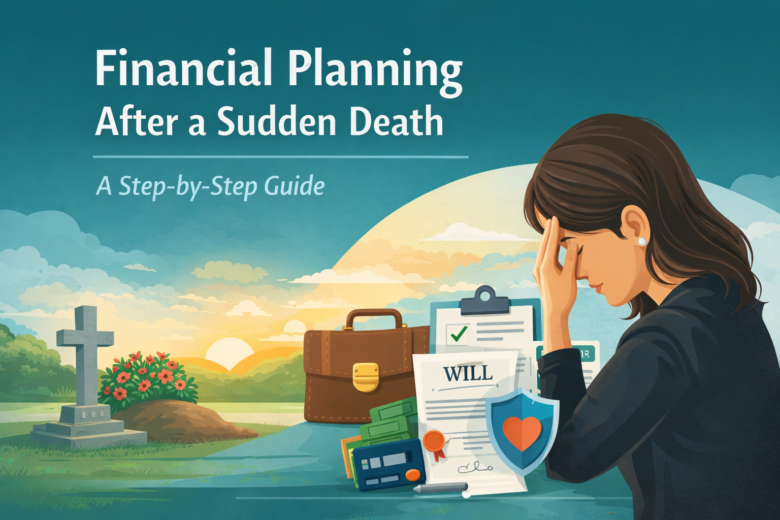
Key Points:
➜ Take immediate financial steps like obtaining death certificates, notifying banks, and reviewing insurance policies to stabilize finances.➜ Organize legal and financial documents, settle debts, and understand the probate process to manage the estate properly.
➜ Create a temporary financial plan and seek professional advice to protect your family’s long-term financial security.
Losing a loved one unexpectedly is one of the most emotionally difficult experiences a family can face. Along with grief, many families are suddenly confronted with complex financial decisions that must be handled quickly. In the United States, millions of families go through this process every year. More than 2.8 million people die annually, creating millions of grieving family members who must manage legal and financial matters soon after a loss.
The financial burden can also be significant. Research suggests that the average direct costs associated with a death can reach about $20,000, even before considering lost wages or emotional stress. Funeral expenses alone typically range between $7,000 and $12,000, with additional costs for burial plots, legal services, and administrative paperwork.
Beyond the immediate costs, families often spend months navigating probate, settling debts, transferring assets, and managing taxes. Probate alone may cost 3% to 7% of the estate value and take an average of 16–20 months to complete depending on the complexity of the estate.
This guide walks through the financial steps families should take after a sudden death. While every situation is unique, following a structured approach can help protect the family’s finances and prevent long-term financial stress.
📚 Read More: Why You’re Overpaying for Health Insurance (And How to Fix It Today)
Understand the Immediate Financial Impact
The financial effects of a sudden death extend beyond funeral arrangements. Families often face multiple types of expenses simultaneously, including medical bills, legal fees, estate administration costs, and ongoing household expenses.
For many households, the loss of income from the deceased person can be one of the biggest challenges. If the deceased was the primary earner, surviving family members may need to quickly reassess their budget and financial priorities.
Common financial impacts include:
| Financial Area | Potential Impact |
|---|---|
| Funeral and burial | Immediate expenses within days |
| Medical bills | Final healthcare costs |
| Legal and probate costs | Estate administration fees |
| Lost income | Household budget adjustments |
| Ongoing bills | Mortgage, utilities, insurance |
In many cases, families underestimate the time required to settle financial matters. Studies show that families spend over 400 hours on average managing estate tasks after a death, including paperwork, financial accounts, and legal issues.
Understanding these financial realities can help families approach the process with a clearer plan.
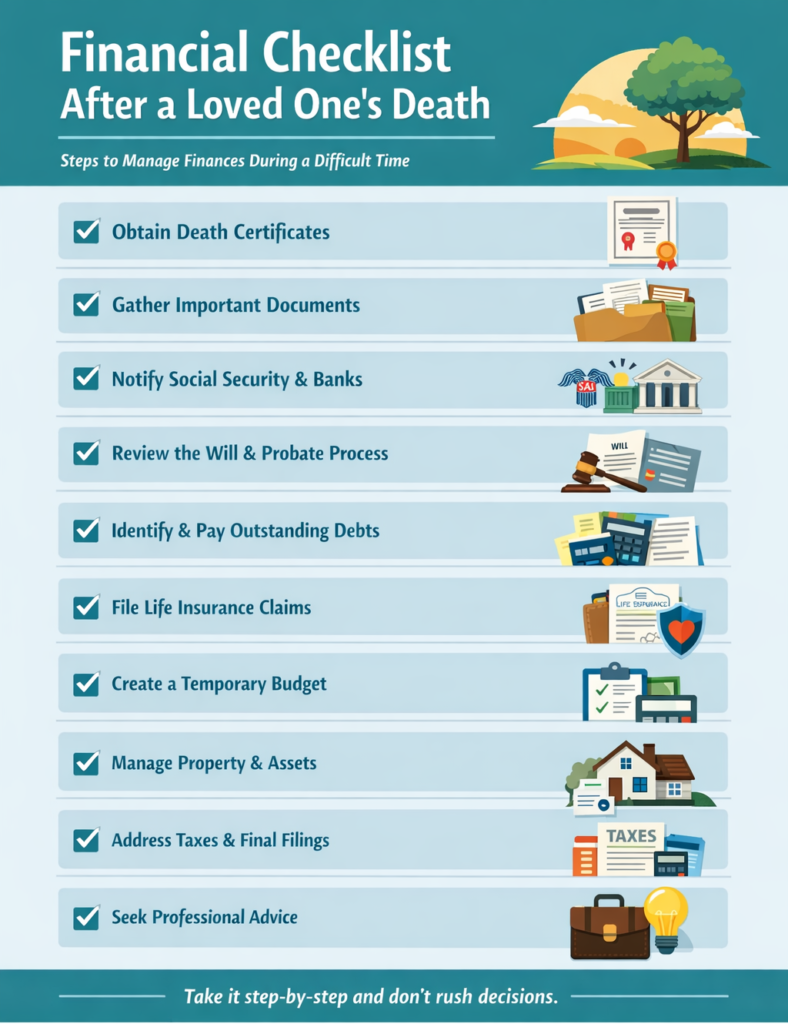
Step 1: Obtain Official Death Certificates
The first financial step after a death is obtaining multiple certified copies of the death certificate. Most financial institutions require a certified copy before they can close accounts, transfer assets, or process insurance claims.
Families often underestimate how many copies are needed. It is common to require 10 to 15 copies depending on the number of financial institutions involved.
Organizations that typically require a death certificate include:
-
Banks and credit unions
-
Life insurance companies
-
Retirement account providers
-
Social Security Administration
-
Mortgage lenders
-
Utility providers
Having multiple copies readily available can speed up the financial settlement process.
Step 2: Locate Important Financial Documents
Before making financial decisions, families should gather all essential documents related to the deceased person’s finances.
Important documents include:
-
Will or estate planning documents
-
Life insurance policies
-
Bank and investment account statements
-
Mortgage and loan documents
-
Credit card statements
-
Retirement accounts such as 401(k) or IRA
-
Tax returns
-
Property deeds and titles
Creating a central folder with these documents helps ensure nothing important is overlooked during the estate settlement process.
Step 3: Notify Financial Institutions and Government Agencies
Once documentation is collected, the next step is notifying relevant institutions about the death.
Key organizations to notify include:
-
Social Security Administration
-
Banks and credit card companies
-
Insurance companies
-
Employers
-
Pension providers
-
Investment firms
The Social Security Administration may also provide survivor benefits for spouses or dependent children in certain circumstances. Understanding eligibility can help families replace part of the lost income.
Notifying institutions early helps prevent identity theft and fraudulent activity on the deceased person’s accounts.
Step 4: Determine Whether Probate Is Required
Probate is the legal process used to validate a will, settle debts, and distribute assets.
Many families are unfamiliar with probate until they experience it firsthand. Surveys show that over half of Americans have little understanding of the costs or timelines associated with probate, even though it is a common legal process after death.
Typical probate responsibilities include:
-
Verifying the will
-
Identifying estate assets
-
Paying debts and taxes
-
Distributing remaining assets to heirs
The process can be lengthy. Depending on the state and complexity of the estate, probate may take six months to two years to complete.
Some assets may bypass probate entirely, such as:
-
Life insurance policies with named beneficiaries
-
Retirement accounts with designated beneficiaries
-
Jointly owned property
-
Trust assets
Understanding which assets go through probate can simplify financial planning after a loss.
Step 5: Review Outstanding Debts
One of the most common sources of confusion after a death is determining who is responsible for outstanding debts.
In most cases, debts are paid from the deceased person’s estate rather than by surviving family members. Creditors are typically paid in a specific order during probate.
Common debts that may need to be addressed include:
-
Credit cards
-
Medical bills
-
Mortgage balances
-
Personal loans
-
Auto loans
It is important not to rush into paying debts personally without understanding legal obligations. Consulting with a probate attorney or estate professional can clarify which debts must be paid and which may not apply to surviving family members.
Step 6: Evaluate Life Insurance and Survivor Benefits
Life insurance often plays a critical role in financial stability after a sudden death.
Once the insurance company receives the death certificate and claim forms, benefits are usually paid within a few weeks. These funds may be used for:
-
Funeral expenses
-
Debt repayment
-
Living expenses
-
Education costs for children
-
Emergency savings
For families who relied heavily on the deceased person’s income, life insurance benefits may provide the financial cushion needed to adjust to a new financial reality.
Step 7: Create a Temporary Household Budget
After a sudden loss, household income and expenses often change dramatically. Creating a temporary financial plan can help families stabilize their finances during the transition.
Important steps include:
-
Identifying current income sources
-
Listing essential monthly expenses
-
Eliminating unnecessary spending temporarily
-
Reviewing emergency savings
A temporary budget provides clarity and helps prevent financial decisions made under emotional stress.
Step 8: Manage Taxes and Final Financial Filings
The financial responsibilities after a death include several tax-related obligations.
These may include:
-
Filing the deceased person’s final income tax return
-
Filing estate income tax returns if required
-
Paying any outstanding taxes
In some cases, estate taxes may apply, though federal estate taxes typically affect only very large estates.
Working with a tax professional can help ensure all filings are completed accurately.
Step 9: Protect Assets and Property
If the deceased person owned property, it is important to protect and maintain those assets during the estate settlement process.
This may include:
-
Keeping mortgage payments current
-
Maintaining insurance coverage
-
Securing the home or property
-
Managing investment accounts responsibly
Failure to maintain property or insurance can create additional financial risks for the estate.
Step 10: Seek Professional Guidance When Needed
Handling financial matters after a death can be overwhelming. Professional guidance may help families navigate the process more efficiently.
Professionals who may assist include:
⚖️ Estate attorneys
⚖️ Financial advisors
⚖️ Certified public accountants
⚖️ Insurance advisors
Legal and financial experts can help families avoid costly mistakes while settling an estate.
Common Financial Mistakes Families Make After a Death
Grief can make financial decision-making difficult. Families sometimes make mistakes that create long-term financial consequences.
Common mistakes include:
❌ Paying debts without verifying responsibility
❌ Distributing assets before probate is complete
❌ Overlooking insurance policies
❌Failing to track estate expenses
Studies show that family conflict over inheritance occurs in many estates, particularly when financial planning was not clearly established beforehand.
Taking time to follow a structured process can prevent many of these problems.
How Families Can Prevent Financial Chaos
Although sudden death cannot be predicted, financial preparation can reduce stress for surviving family members.
Important planning steps include:
✅ Creating a will
✅ Establishing a living trust
✅ Maintaining life insurance coverage
✅ Documenting financial accounts
✅ Communicating financial plans with family members
Unfortunately, many Americans are not fully prepared. Research indicates that more than half of Americans do not have any estate planning documents, leaving families vulnerable to complex legal and financial processes.
Planning ahead can significantly reduce the financial burden placed on surviving loved ones.
Emotional and Financial Recovery
Financial recovery after a sudden death is rarely immediate. Families may need time to adjust to new financial circumstances, especially if income levels change.
Support systems can include:
☹ Financial counseling
☹ Grief support groups
☹ Legal guidance
☹ Community resources
Grief and financial stress often overlap, making it important to approach the situation with patience and support.
Moving Forward With Financial Stability
While financial planning after a sudden death can feel overwhelming, taking clear, structured steps can help families regain stability.
The key priorities should include:
✓ Handling immediate financial responsibilities
✓ Protecting assets and income sources
✓ Settling the estate properly
✓ Planning for long-term financial security
Although the process may take months or even years, careful planning and professional guidance can help families navigate the financial challenges that follow an unexpected loss.
Sources
- Forbes – The Financial Cost of Losing a Loved One
- Insurance Brokers USA – Cost of Funeral and End-of-Life Expenses
- Trust & Will – Probate Study
- Gitnux – Estate Planning Statistics
- Gitnux – Grief Statistics
- Probate Court Bond – Estate Planning Data
Disclaimer:
The information provided on MyAmericanSavings.us is for educational purposes only and should not be construed as financial, investment, or legal advice. Please consult with a licensed professional before making any financial decisions.