

Disclaimer:
The information provided on MyAmericanSavings.us is for educational purposes only and should not be construed as financial, investment, or legal advice. Please consult with a licensed professional before making any financial decisions.
Key Points
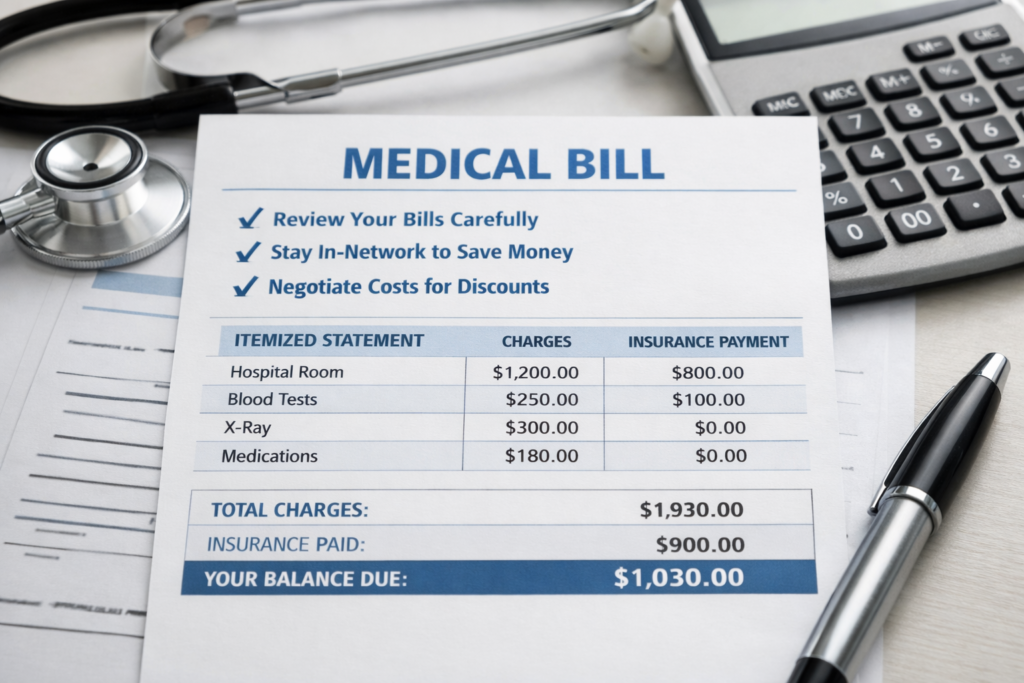
Check your bills: Request an itemized bill to spot errors and avoid overpaying.
Stay in-network: Using in-network providers helps reduce out-of-pocket costs.
Negotiate costs: Ask about discounts, payment plans, or financial assistance.
Healthcare costs in the United States can be overwhelming—even for people who have insurance. Many families assume that once they’re insured, most medical expenses will be covered. Unfortunately, deductibles, copayments, coinsurance, and surprise bills often leave patients paying thousands of dollars out of pocket.
The numbers reveal how serious the issue has become. About 100 million Americans currently have medical debt, and roughly 41% of adults report owing money for healthcare. Even more surprising, 63% of people with past-due medical debt incurred it while they were insured, proving that coverage doesn’t always guarantee affordable care.
Medical bills also vary widely depending on hospital pricing and procedures. A hospital visit can quickly lead to thousands of dollars in charges, leaving many patients confused about what they actually owe.
The good news is that medical bills are often negotiable and sometimes contain errors. With the right strategies, patients can significantly reduce their healthcare expenses—even when they already have insurance.
Below are practical ways to lower medical bills and protect your financial health.
Why Medical Bills Are Still So High With Insurance?
Many people are surprised when they receive large bills after a doctor visit or hospital stay. This happens because insurance doesn’t always cover the entire cost.
📊 Common Out-of-Pocket Costs
| 💳 Cost Type | What It Means | Example |
|---|---|---|
| Deductible | Amount you must pay before insurance starts covering services | $2,000 deductible |
| Copayment | Fixed amount paid for certain services | $30 doctor visit |
| Coinsurance | Percentage of cost you pay after deductible | 20% of hospital bill |
| Out-of-network charges | Extra costs when using providers outside your network | Higher fees |
Even a single emergency visit can create thousands of dollars in charges due to these cost-sharing structures.
1. Always Ask for an Itemized Bill
Medical billing errors are surprisingly common. Hospitals process thousands of transactions, and mistakes can easily occur.
Requesting an itemized bill breaks down every charge so you can review it carefully.
🔍 What to Look For
| ⚠️ Possible Billing Errors | Why It Matters |
|---|---|
| Duplicate charges | Same service billed twice |
| Incorrect procedure codes | Higher-cost procedure listed |
| Unreceived services | Being billed for treatments you never received |
| Wrong medication charges | Pharmacy errors |
If something doesn’t look right, contact the hospital’s billing department and request a correction.
2. Negotiate Your Medical Bill
Many patients don’t realize that medical bills are often negotiable.
Research shows that 60% of Americans with medical debt have attempted to negotiate their bills, and 90% of those negotiations resulted in some savings.
Hospitals may accept lower payments because they prefer receiving some payment rather than sending accounts to collections.
💬 Negotiation Strategies
| Strategy | Why It Works |
|---|---|
| Ask for a discount | Many hospitals offer prompt-pay discounts |
| Request financial assistance | Non-profit hospitals often provide charity care |
| Compare procedure prices | You may find cheaper alternatives |
| Ask for cash-price reductions | Some hospitals reduce bills for direct payment |
Even small negotiations can reduce bills by hundreds—or sometimes thousands—of dollars.
3. Stay In-Network Whenever Possible
One of the biggest causes of high medical bills is using out-of-network providers.
Even if you visit an in-network hospital, you might unknowingly receive care from an out-of-network doctor.
📊 Cost Difference Example
| Provider Type | Average Patient Cost |
|---|---|
| In-network provider | Lower negotiated rates |
| Out-of-network provider | Higher fees |
| Emergency out-of-network care | Often the most expensive |
Before scheduling procedures, always confirm that both the facility and the doctor are in your insurance network.
4. Use Preventive Care Benefits
Many health insurance plans cover preventive services at no cost to the patient.
These services help detect health issues early before they become more expensive to treat.
🩺 Preventive Services Often Covered
| Service | Potential Savings |
|---|---|
| Annual wellness exam | Early diagnosis |
| Vaccinations | Avoid costly illnesses |
| Screenings (blood pressure, cholesterol) | Prevent chronic conditions |
| Cancer screenings | Detect disease early |
Using these services regularly can reduce long-term healthcare costs.
5. Compare Prices Before Procedures
Medical prices vary widely between hospitals and clinics—even within the same city.
Some patients unknowingly pay two or three times more simply because they didn’t compare providers.
📊 Price Differences
| Procedure | Low Price | High Price |
|---|---|---|
| MRI scan | $400 | $3,500 |
| Blood test | $50 | $300 |
| X-ray | $100 | $1,000 |
The above are rough figures and may vary as per the healthcare service provider. Price transparency tools and insurance portals often allow patients to estimate costs before receiving care.
6. Use Generic Medications
Prescription drugs are another major contributor to medical costs.
Whenever possible, ask your doctor about generic alternatives.
💊 Brand vs Generic Cost Example
| Medication Type | Average Monthly Cost |
|---|---|
| Brand-name drug | $300+ |
| Generic equivalent | $20–$50 |
Generic medications contain the same active ingredients but cost significantly less.
7. Apply for Financial Assistance Programs
Many hospitals offer financial assistance programs, especially nonprofit hospitals.
These programs are often available to middle-income families—not just those with very low incomes.
💰 Common Assistance Options
| Program | What It Provides |
|---|---|
| Charity care | Partial or full bill forgiveness |
| Sliding-scale discounts | Reduced charges based on income |
| Interest-free payment plans | Spread payments over time |
| Hardship discounts | Special reductions for financial difficulty |
Unfortunately, many patients never apply for these programs simply because they don’t know they exist.
8. Use Health Savings Accounts (HSAs)
Health Savings Accounts can help reduce medical expenses through tax advantages.
📊 HSA Benefits
| Advantage | Explanation |
|---|---|
| Tax-deductible contributions | Lower taxable income |
| Tax-free growth | Investments grow without tax |
| Tax-free withdrawals | For qualified medical expenses |
This triple tax benefit makes HSAs one of the most powerful tools for healthcare savings.
9. Review Your Insurance Explanation of Benefits (EOB)
The Explanation of Benefits document shows how your insurance processed a claim.
It’s important to compare this document with your medical bill.
📄 What to Check
| Section | What It Shows |
|---|---|
| Allowed amount | What insurance agreed to pay |
| Insurance payment | Portion paid by insurer |
| Patient responsibility | What you must pay |
| Provider network status | In-network or out-of-network |
Mistakes in claims processing can sometimes lead to higher bills.
10. Set Up a Payment Plan Instead of Using Credit
If you cannot pay the entire bill at once, many hospitals offer interest-free payment plans.
💳 Payment Options Comparison
| Option | Pros | Cons |
|---|---|---|
| Hospital payment plan | Usually interest-free | Requires regular payments |
| Credit card | Immediate payment | High interest |
| Medical loan | Fixed terms | Possible fees |
Choosing the right payment plan can prevent additional financial stress.
11. Appeal Insurance Claim Denials
Sometimes medical bills are high because an insurance company denied a claim. This does not always mean the decision is final. Many claims are rejected due to simple paperwork issues, coding errors, or missing information.
If your claim is denied, carefully review the Explanation of Benefits (EOB) and contact your insurance provider to understand the reason for the denial. You can request that your healthcare provider submit additional documentation or correct any coding mistakes.
Patients also have the right to file an appeal with their insurance company. Many insurers provide a formal appeal process that allows you to request a review of the decision. If the claim is approved after the appeal, the insurance company may cover a significant portion of the bill.
📊 Common Reasons Claims Are Denied
| Reason | Explanation |
|---|---|
| Incorrect billing code | Procedure coded incorrectly |
| Missing documentation | Provider failed to include medical notes |
| Out-of-network provider | Service performed outside insurance network |
| Pre-authorization missing | Insurance approval required before procedure |
Understanding these reasons can help you correct errors and potentially lower your final bill.
12. Watch Out for Surprise Medical Bills
Another major reason people face large medical bills is surprise billing. This happens when a patient unknowingly receives care from an out-of-network provider while visiting an in-network facility.
For example, you might visit an in-network hospital for surgery, but the anesthesiologist or lab services might not be covered under your plan. This can result in unexpected charges that are much higher than anticipated.
Fortunately, new consumer protection rules have been introduced to reduce surprise billing. These protections limit the amount patients must pay in certain emergency or out-of-network situations.
⚠️ Situations That Often Lead to Surprise Bills
| Situation | Why It Happens |
|---|---|
| Emergency room visits | Providers may be out-of-network |
| Ambulance services | Often not included in insurance networks |
| Specialist consultations | Some specialists operate independently |
| Laboratory testing | Labs may not accept the same insurance |
Before any planned procedure, ask the hospital to confirm that all providers involved are within your insurance network.
13. Build a Medical Emergency Fund
Even with insurance and cost-saving strategies, unexpected healthcare expenses can still occur. Building a medical emergency fund can help protect your finances during these situations.
Financial experts often recommend setting aside three to six months of living expenses in an emergency fund. While this may sound like a large amount, starting with small monthly contributions can gradually build a helpful safety cushion.
Having dedicated savings for medical expenses can prevent the need to rely on high-interest credit cards or personal loans. It also reduces financial stress during medical emergencies.
💰 Example Medical Emergency Fund Plan
| Monthly Savings | Savings After 1 Year | Savings After 3 Years |
|---|---|---|
| $50 | $600 | $1,800 |
| $100 | $1,200 | $3,600 |
| $200 | $2,400 | $7,200 |
Even modest savings can provide peace of mind when unexpected medical costs arise.
📊 The Bottom Line on Medical Bills
Medical bills can feel overwhelming, especially when you already have health insurance and still face large out-of-pocket costs. Deductibles, copayments, and billing errors often leave patients paying more than they expected. The good news is that medical expenses are not always fixed. By reviewing bills carefully, negotiating with providers, comparing prices, and using financial assistance programs, many patients can significantly reduce their healthcare costs.
Being proactive about your healthcare finances is one of the most effective ways to avoid unnecessary debt. Asking questions, understanding your insurance coverage, and exploring cost-saving strategies can make a major difference in the final amount you pay. With the right approach, it is possible to protect both your health and your financial well-being—even in a complex healthcare system.